

Pixel Sage
The Traps Below: Lost Paths of Rick Dangerous
Unearthing the lost pixels of gaming's past
18 August 2025
Unearthed in the Shadows of the 80s
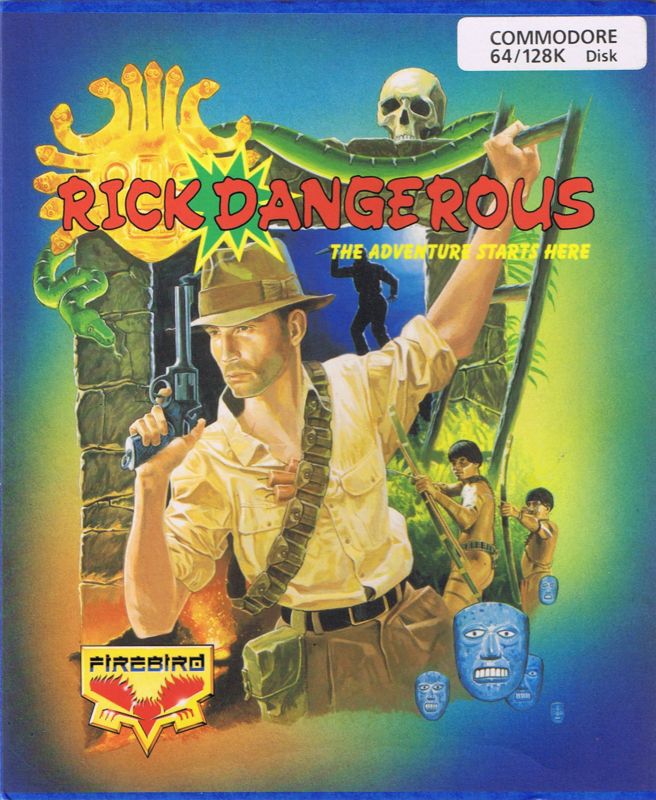
Rick Dangerous first emerged in 1989 under the pixelated veil of platforms like the Atari ST, Amiga, ZX Spectrum, Amstrad CPC, and MS-DOS PC. Crafted by the British studio Core Design, who would later carve Lara Croft into legend, Rick was their prototype, a spiritual ancestor cloaked in green, dodging spikes before Tomb Raiders ever plundered the popular consciousness. His world didn’t just demand timing; it demanded foresight.
This was not a game of leniency. Layered in the aesthetics of pulp adventure serials and Indiana Jones motifs, Rick’s perilous journey begins with a plane crash in the Amazon and cascades into Egyptian tombs, Nazi-infested castles, and missile-riddled underground bases. But beneath that pulpy gloss lies a mechanic rhythm of muscle memory and environmental reconnaissance, where trial was fused to error—and traps were not fair, but final.
Rick Dangerous is not whispered of in emulation forums for its accessibility. Its controls are stiff by modern standards, its design unforgiving, yet these woven elements lend the game its hidden virtue: commitment. The game punishes as a rite of passage. It was designed to be mastered, not breezed through. In that lies its revelatory charm.
Pixel Tombstones and Cryptic Brilliance
The danger in Rick Dangerous is not metaphorical, it is ubiquitous. Every screen, every corridor conceals spikes, arrows, crushing blocks, and flame jets awaiting the overconfident. At first glance, this might suggest cheap difficulty. But delve deeper with the sage-eye, and a deeper truth unearths: memorization becomes meditation. Each trap, though fatal, is consistent. Each puzzle, though sudden, is learnable.
Rick wasn't meant to be fair; he was meant to be learned. The game’s interaction with the player is adversarial, almost mythic in its balancing act between frustration and reward. Rarely does a platformer commune so transparently with its audience’s persistence. It demands both sweat and gritted teeth, and in return offers triumph in small, hard-won increments. In this way, it predates and parallels the philosophy of modern Soulslike titles.
Behind the skeletal design, Rick’s visuals, though compact, were sharp in spirit. Enemy animations were swift, sound effects deliciously tinny, and every new booby-trapped room was a crimson-tinged puzzlebox. The tile-based layouts hid their complexity behind a parallax simplicity. One could almost feel the brickwork sigh with each triggered spike.

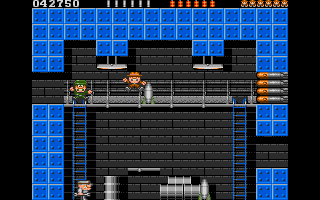
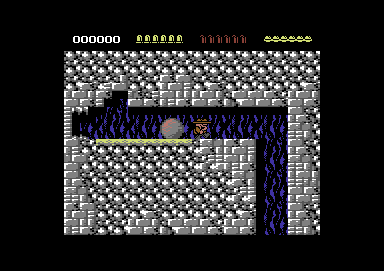
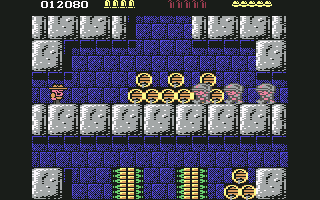
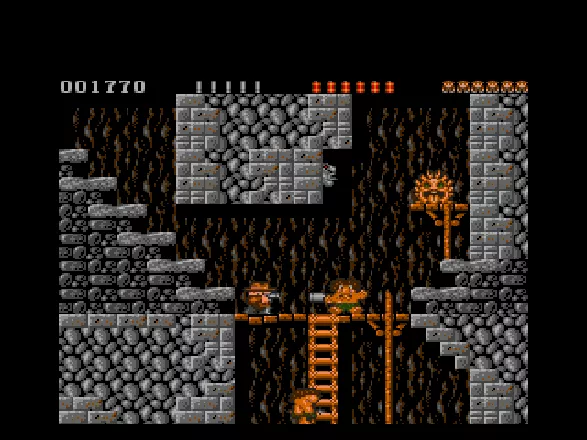
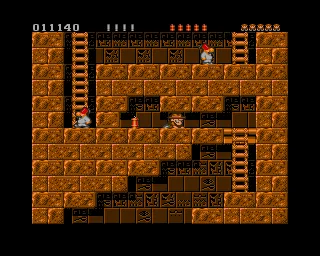
Image Credits to Moby Games, Giantbomb & IGDB
The Cult That Whispers His Name
Though never awarded the laurels of its peers, Rick Dangerous formed a whispered circle of reverence, especially in European gaming circles. In the UK, where budget titles on the ZX Spectrum and Amstrad CPC reigned, Rick was among the kings of the difficult gods. This was not a game recommended lightly. It was passed down like folklore: “Play this... if you dare.”
The game’s sequel, Rick Dangerous 2, attempted to shift genres slightly into a more sci-fi pulp expression, drifting away from pure trap-dodging into a slower approach, but never recaptured the mystic intensity of the original. Over time, Rick fell deeper into the dark corners of dorm room disks and emulator folders, his legacy overshadowed by his creators’ more commercial offspring. Yet the spark of cult never died.
Today, online forums, remakes, and fan ports still honor the indomitable adventurer, keeping his impossibly difficult flame alive. From Flash remakes to Unity rebuilds, Rick remains subject to fan devotion. Even modern indie titles like Spelunky echo Rick’s DNA, a tip of the fedora toward the past.
Forever Trapped, Forever Brilliant
Rick Dangerous is less a game and more a rite. It is not for the impatient or faint of coordination. It tests the mettle of explorers, ensnares the careless, and rewards only those willing to walk the path again and again, each death a carved glyph on the wall of their learning.
There are many platformers lost to the tides of time, but few hold the same cursed allure. Rick beckons from beyond, a challenge unchanged, waiting in amber. The screens are static, but the danger feels freshly drawn with each replay. That is perhaps his greatest trick.
So wanderers of pixels, seekers of the strange—should you find Rick Dangerous tucked into an emulator archive or glimmering on a forgotten floppy, do not pass him by. For he is a relic of a different age: an age unmerciful, pure, and mystically addictive.
One dares not say he was fair.
But he was eternal.